

Windows on the Text: Bible commentaries from Muslim contexts
In partnership with Langham Publishing, SAT is commissioning and publishing a series of Bible commentaries written by Christian authors living in Muslim contexts specifically for readers living in those same contexts in different parts of the world. They bring the biblical text into conversation with the context, seeking to ask and answer specific questions asked by the people who live there. They are highly contextual, yet at the same time, address issues of interpretation that are pertinent to Muslim contexts worldwide.
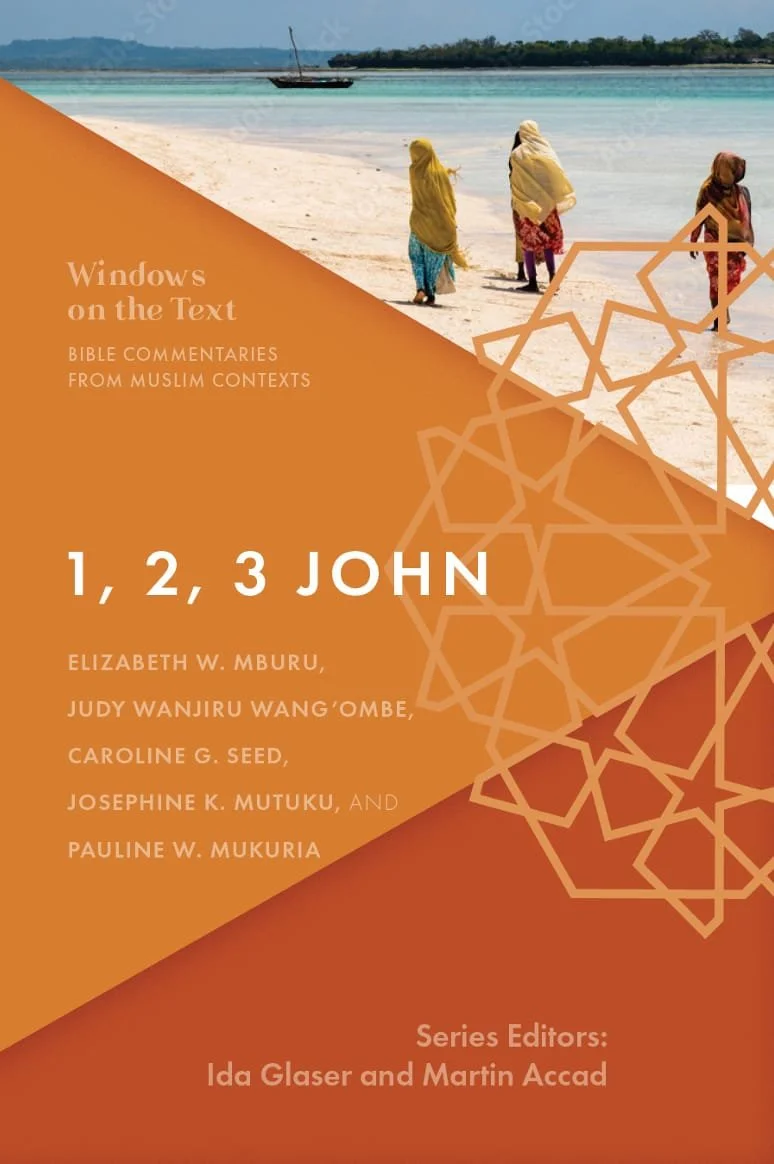
“This commentary on 1, 2, 3 John is a groundbreaking work that bridges biblical scholarship with the lived realities of East African Muslim contexts. Rooted
in thoughtful exegesis of the Greek text, and enriched by stories and insights
from the Kenyan coast, it brings the Johannine epistles to life in fresh and
powerful ways.”
“What a joy to read this commentary that brings together these voices from Africa with a specific emphasis on women, and more specifically women who work in Muslim communities.”
Commentary on 1,2,3 John published
This unique study on 1, 2, 3 John addresses interpretation challenges that arise for people from Islamic contexts on the East African coast. Exploring questions regarding a relationship with God, the nature of incarnation, sin, sacrifice, forgiveness, the spirit world, and coming judgement, the research process included reader-centered sessions with women from the region, thus addressing the bigger questions of faith while speaking directly to the real-life issues they face.
Filled with wisdom for those from the East African coast and beyond, each chapter includes stories from local people, biblical commentary, theological reflection, and practical insights. The authors’ unique approach is rooted in current scholarship on the Midrashic exegesis of 1 John, wherein the narrative of Cain and Abel is the central motif. This homiletic framework, which allows deep engagement with Islamic contexts, is extended to 2 and 3 John.
Windows on the Text is a ground-breaking Bible commentary series written by followers of Jesus in Muslim contexts. It develops biblical insight in deliberate conversation with the Qur’an, the Hadith, and local Islamic cultures. Confident that the Bible in its entirety speaks directly into Muslim contexts, it opens new windows into the holy word of God to equip and empower believers to live out their faith in loving service and clear communication within their communities.
“This commentary on 1, 2, 3 John is a refreshing and much-needed contribution to global biblical scholarship. By interpreting the Johannine letters through the lens of the Kenyan coast and Muslim contexts, the team of authors opens up new windows of understanding that resonate far beyond Africa.”
Extract from Commentary on 1 John 1:1-4
“Fellowship” (koinonia) – keyword
The word “fellowship” is derived from the Greek word koinōnia, which can be translated as communion, participation, sharing a common life, and partnership. It is a word of intimacy and closeness. It expresses a personal, two-sided relationship. It is found four times in 1 John and describes the living bond in which the children of God stand. Mzee John does not often use it; it is probable that the secessionists used it, and that Mzee John was explaining that the way to true fellowship is only through Jesus, the Word of life.
Fellowship is a crucial component of any community of faith. Muslims belong to the umma, the worldwide community of Muslims which we might call the “Islamic fellowship,” and the Qur’an has many verses which speak of the relationship between believers and compare it with their relationship with non-Muslims (e.g. 4:69; 5:55–58). The umma is evident in various town centres along the coast of East Africa – for instance, in Mombasa, a cosmopolitan city-port where Muslims coexist with non-Muslims. Distinct dress for both male and female distinguishes Muslims from non-Muslims, and adherence to Islamic duties also unifies Muslims as they pray, fast, give alms, recite the creed (Shahada), and perform other Islamic ceremonies such as the maulidi, ‘īd al-Fiṭr and‘īd al-aḍḥā. There is a collective and communal understanding of being a Muslim; therefore, social networks are important.